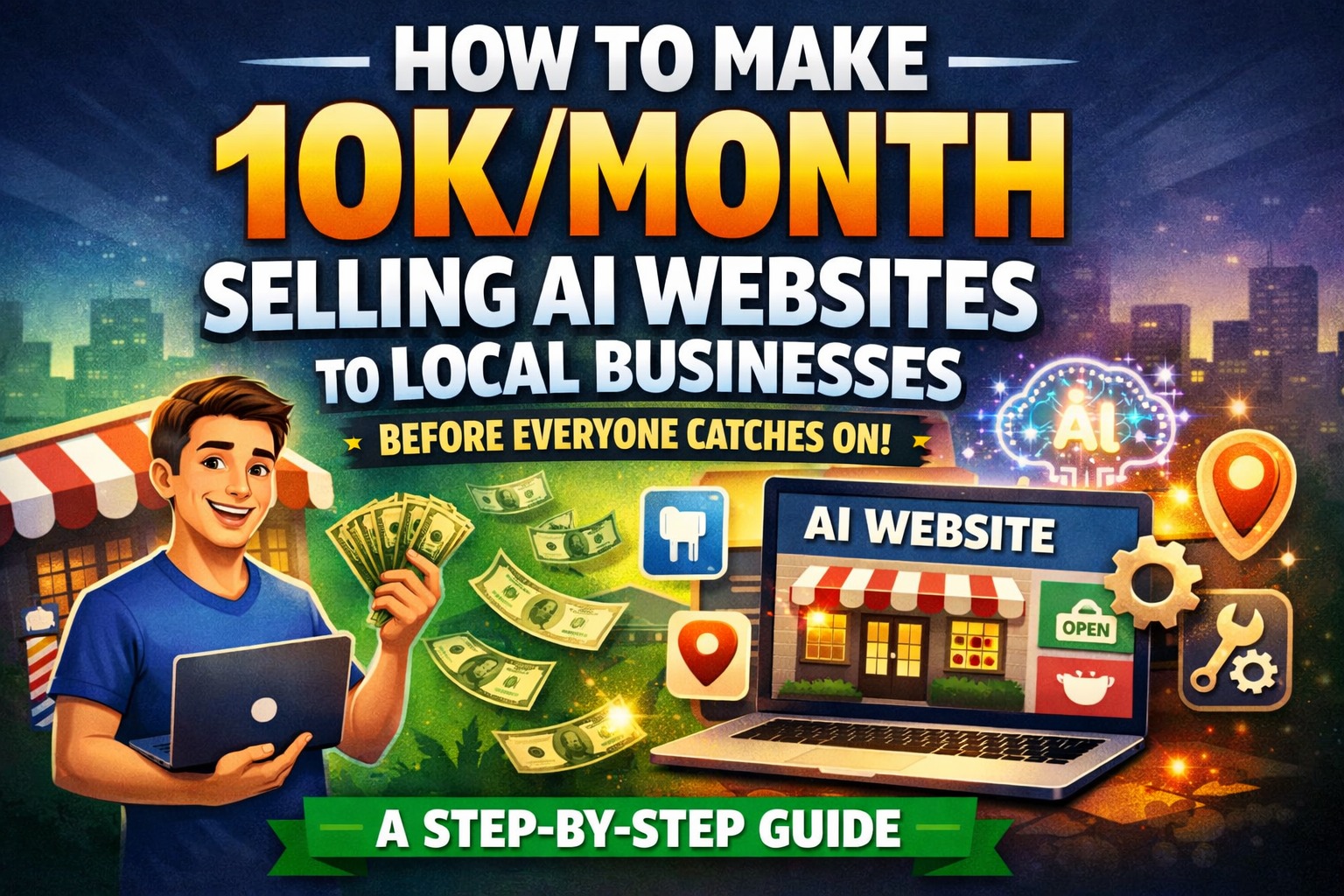
The AI Gold Rush: Why Local Businesses Are About to Get a Website Upgrade – and How You Can Profit
The Urgent Need: Digital Stagnation on Main Street
Walk down any Main Street in America, and you’ll likely witness a stark digital divide. While e-commerce giants dominate online retail, countless local businesses are stuck in the digital dark ages. Their websites, if they even exist, are often outdated, clunky, and mobile-unfriendly. A recent study by the Local Search Association found that nearly 60% of small businesses lack a website optimized for mobile devices, despite the fact that mobile accounts for over half of all web traffic. This digital neglect translates directly into lost revenue. Imagine a potential customer searching for “best Italian restaurant near me” on their phone. If your local Italian eatery’s website is slow, difficult to navigate, or simply doesn’t appear in search results, that customer is likely heading to your competitor – the one with a modern, user-friendly online presence. The opportunity here is massive. Local businesses desperately need help bridging this digital gap, and AI offers an unprecedented solution.
AI’s Disruptive Force: Democratizing Web Design
Traditionally, building a professional website required either expensive web design agencies or specialized coding skills. This barrier to entry has kept many local businesses from investing in a strong online presence. However, AI-powered website builders are changing the game. These platforms leverage artificial intelligence to automate the website creation process, making it accessible to anyone, regardless of technical expertise. For example, Durable.co uses AI to generate a complete website, including text and images, based on just a few simple prompts about your business. This means a local bakery owner, who previously couldn’t afford a professional website, can now have a stunning online storefront up and running in a matter of hours, not weeks or months. The real disruption lies in the speed and affordability. AI is democratizing web design, leveling the playing field, and creating a massive opportunity for those who can harness its power.
First-Mover Advantage: A Limited Window of Opportunity
The market for AI-powered website solutions is still in its early stages. While AI website builders are gaining traction, many local businesses are still unaware of their potential. This creates a limited window of opportunity for entrepreneurs to establish themselves as trusted providers of AI website services. Think of it like the early days of social media marketing. Those who jumped in early and learned the ropes reaped the biggest rewards. As more and more people discover the ease and affordability of AI website builders, the market will inevitably become saturated. Competition will increase, and margins will shrink. The time to act is now, before everyone else catches on. By becoming an early adopter, you can establish a strong reputation, build a loyal client base, and position yourself as a leader in this rapidly growing market.
Beyond the Hype: Tangible Benefits for Local Businesses
AI-powered websites aren’t just about flashy technology; they offer tangible benefits that directly impact a local business’s bottom line. Improved SEO is a prime example. AI can automatically optimize website content and structure for search engines, making it easier for customers to find the business online. Faster load times are another critical advantage. AI can optimize images and code to ensure websites load quickly, providing a better user experience and reducing bounce rates. Personalized user experiences are also within reach. AI can analyze user behavior and tailor website content to individual preferences, increasing engagement and conversions. For instance, an AI-powered website for a local bookstore could recommend books based on a customer’s past purchases or browsing history. These are not just theoretical advantages; they are real-world improvements that can drive more traffic, generate more leads, and ultimately, increase revenue for local businesses.
Building Your AI Website Empire: A 30-Day Blueprint for Creation, Customization, and Client Acquisition
The AI Toolkit: Choosing Your Weapon
The AI website builder landscape is rapidly evolving. Your choice of platform will significantly impact efficiency and the quality of the final product. Here’s a breakdown of leading contenders:
Durable: Marketed as the fastest way to get online, Durable excels at speed and simplicity. Input your business type and location, and it generates a complete website with AI-written content and stock images in seconds. Pricing starts at $15/month, making it accessible. Its strength lies in rapid prototyping and getting a basic site live quickly. However, customization options are more limited compared to other platforms. Ideal for businesses needing a simple online presence fast, like a newly opened food truck.
Framer: While not strictly an AI website builder, Framer leverages AI to streamline the design process. Its strength lies in its design capabilities and interactive elements. It offers more granular control over design and animations. Framer requires a steeper learning curve but allows for highly customized and visually stunning websites. Pricing starts free, then jumps to $20/month, making it attractive for design-focused businesses like architecture firms or creative agencies that require a portfolio-driven website. Its AI copilot assists with content creation and code generation, streamlining workflows.
Wix AI Website Builder: Wix has integrated AI directly into its platform. Users answer a series of questions about their business, and the AI generates a personalized website with tailored content and design. Wix offers a vast app market, enabling integration with various third-party tools. Pricing varies widely, with basic plans starting around $16/month. Wix strikes a balance between ease of use and customization, making it suitable for a wide range of businesses, such as a local gym needing appointment scheduling and online class booking.
Strikingly: Strikingly focuses on single-page websites, which can be ideal for certain types of businesses. It offers simple templates and easy-to-use editing tools. While not as feature-rich as other platforms, Strikingly is a good option for businesses that want a basic online presence with minimal effort. Pricing starts free, then goes to $8/month. Think of a freelancer offering a specific service or an artist showcasing their work.
Actionable Step: Sign up for free trials of at least two of these platforms. Build a sample website for a hypothetical local business (e.g., a coffee shop) to experience the strengths and weaknesses of each firsthand.
From Generic to Genius: Mastering Customization
AI website builders provide a starting point, not a finished product. The key to success lies in customization.
Refine AI-Generated Content: AI-generated text is often generic. Rewrite it to reflect the business’s unique voice and brand. For example, if the AI writes “We offer the best coffee in town,” change it to “We source ethically-grown beans and roast them in-house for a rich, bold flavor you won’t find anywhere else.”
Optimize Images and Branding: Replace stock photos with high-quality images of the business, its products, or its team. Ensure the website’s color scheme and typography align with the brand’s identity. A local bakery should showcase images of its freshly baked goods, not generic pastries.
Leverage AI for Refinement: Use AI tools like ChatGPT to improve the generated content. Ask it to rewrite sections for clarity, SEO optimization, or to add a specific tone of voice. For instance, “Rewrite this paragraph about our plumbing services to be more customer-focused and emphasize our 24/7 availability.”
Incorporate Local SEO Keywords: Integrate location-specific keywords into the website’s content and meta descriptions. For example, “Best Italian Restaurant in [City Name]” or “[City Name] Plumber.” This will improve the website’s visibility in local search results.
Add Customer Testimonials and Reviews: Feature positive reviews from satisfied customers prominently on the website. This builds trust and credibility.
Actionable Step: Take an AI-generated website and spend 2 hours customizing it. Focus on content refinement, image optimization, and local SEO. Track the changes you make and the impact they have on the website’s overall quality.
Lead Generation Powerhouse: Finding Your Clients
Finding local businesses in need of a website upgrade requires a targeted approach.
Cold Outreach: Identify businesses with outdated or non-existent websites. Use tools like Google Maps to find local businesses and review their online presence. Craft personalized email templates or phone scripts that highlight the benefits of an AI-powered website. For example: “I noticed your website is difficult to navigate on mobile devices. I can create a modern, mobile-friendly website for your business in just a few days.”
Targeted Ads: Run targeted Facebook or Google Ads campaigns to reach local business owners. Focus on demographics like age, industry, and location. A sample ad could read: “Is your website losing you customers? Get a free website audit and learn how AI can help.”
Partnerships: Partner with local chambers of commerce, business associations, or marketing agencies. Offer them a referral fee for each client they send your way.
Networking: Attend local business events and networking meetings. Introduce yourself as a website designer specializing in AI-powered solutions.
Actionable Step: Dedicate 1 hour each day to lead generation. Experiment with different outreach methods and track your results to identify what works best.
Closing the Deal: Pricing, Proposals, and Onboarding
Value-Based Pricing: Don’t compete on price alone. Emphasize the value you provide, such as increased website traffic, improved SEO, and higher conversion rates. Package your services to offer different tiers based on the level of customization and support.
Compelling Proposals: Create professional proposals that clearly outline the scope of work, deliverables, timeline, and pricing. Include examples of AI-generated websites you’ve customized.
Smooth Onboarding: Develop a streamlined onboarding process to gather the necessary information from clients, such as their brand guidelines, target audience, and desired website features. Use a questionnaire or a kickoff meeting to ensure you’re aligned with their expectations.
Transparent Communication: Keep clients informed throughout the website development process. Provide regular updates and solicit feedback to ensure they’re satisfied with the progress.
Actionable Step: Create a sample proposal for a hypothetical client. Include different pricing tiers and clearly outline the value proposition.
Effective client communication is key to long-term relationships, but mastering the art of automation is what will truly set you apart.
Navigating the AI Website Minefield: Expert Insights, Ethical Considerations, and the Hidden Challenges of Scale
The Human Touch: AI as a Co-Pilot, Not an Autopilot
AI website builders are powerful tools, but they are not replacements for human expertise. A common pitfall is relying too heavily on the AI’s initial output without critical evaluation and refinement. Consider a local bakery: AI might generate generic text about “delicious treats,” but a human writer can inject personality and specific details about the bakery’s signature sourdough or family history, things AI can’t authentically replicate. The best approach is to view AI as a co-pilot, assisting with the initial heavy lifting, but requiring a human pilot to navigate the final approach and landing. This includes fact-checking AI-generated content, ensuring brand voice consistency, and providing the nuanced customer service AI cannot deliver.
Avoiding the “AI Generic” Trap: Injecting Uniqueness
One of the biggest risks of using AI website builders is creating sites that feel bland and indistinguishable. To avoid this, focus on injecting unique elements that reflect the client’s brand identity. This includes:
- High-Quality Photography: Ditch the generic stock photos and invest in professional photos of the business, its products, and its team. For a local gym, showcase real members working out, rather than generic fitness models.
- Original Video Content: A short video showcasing the business owner’s passion or a customer testimonial can add a powerful human element that AI can’t replicate.
- Hyperlocal Content: Focus on content that is specific to the business’s geographic location and target audience. Mention local landmarks, events, and community initiatives. If you’re building a site for a plumber, mention common plumbing issues in the local area.
- Unique Design Elements: Even within the constraints of an AI website builder, you can add custom CSS or Javascript to create unique design elements that set the site apart.
The key is to identify the client’s unique selling proposition (USP) and ensure that it is prominently featured throughout the website.
Managing Client Expectations: Transparency is Key
Clients may have unrealistic expectations about the capabilities of AI-powered websites. It’s crucial to be transparent about what AI can and cannot do. For example, AI can generate initial drafts of content, but it may not be able to capture the nuances of the client’s brand voice or industry jargon. Similarly, AI can optimize websites for search engines, but it cannot guarantee top rankings.
Set clear expectations from the outset by explaining the role of AI in the website development process and emphasizing the importance of human oversight. This includes outlining the client’s responsibilities, such as providing feedback on content and approving design changes. A well-defined scope of work and a clear communication plan can help prevent misunderstandings and ensure client satisfaction.
Ethical Considerations: Data Privacy, Bias, and Displacement
The use of AI in website development raises several ethical considerations. One concern is data privacy. AI website builders collect data about website visitors, and it’s important to ensure that this data is handled responsibly and in compliance with privacy regulations like GDPR and CCPA.
Another concern is algorithmic bias. AI algorithms can perpetuate existing biases in data, leading to unfair or discriminatory outcomes. For example, an AI website builder might generate content that is biased towards a particular gender or ethnicity. It’s important to be aware of these potential biases and take steps to mitigate them.
Finally, there is the potential for AI to displace human web developers. While AI is unlikely to completely replace human developers, it may automate some of their tasks, leading to job losses. It’s important to consider the social and economic implications of AI and to invest in training and education programs that can help workers adapt to the changing job market.
By addressing these ethical considerations, you can ensure that you are using AI responsibly and ethically.
The next step is building a scalable business that isn’t wholly reliant on your own efforts.
The Future of AI-Powered Websites: Scaling for Sustainable Success
The AI website builder landscape is evolving rapidly. To build a truly sustainable business, you need to anticipate these changes and adapt your strategy accordingly. This isn’t about chasing every new tool, but rather understanding the underlying trends and positioning yourself to capitalize on them.
Predicting the AI Website Horizon
Expect increased specialization. Current AI website builders are generalists. Future iterations will likely cater to niche industries, offering pre-trained models and content libraries specifically designed for sectors like healthcare, legal services, or e-commerce. Imagine an AI that understands HIPAA compliance guidelines when building a website for a medical practice.
Pricing models will become more sophisticated. The current subscription-based approach will likely evolve to include usage-based pricing, tiered feature sets, and bundled services like SEO optimization or content creation. This allows for greater flexibility and caters to diverse client needs. Consider offering a “basic” AI website package for $X/month and a “premium” package with ongoing AI-powered content updates and SEO for $Y/month.
The rise of “AI-assisted design agencies”. The future isn’t about AI replacing agencies, but augmenting them. Agencies will leverage AI for rapid prototyping, content generation, and data analysis, freeing up human designers to focus on strategy, branding, and complex customization. This allows agencies to deliver more value in less time and at a lower cost.
Upselling for Recurring Revenue: Beyond the Initial Build
The initial website build is just the beginning. Recurring revenue streams are crucial for long-term sustainability.
Website Maintenance Packages: Offer ongoing maintenance plans that include regular security updates, plugin management, and performance monitoring. This is a simple way to generate predictable monthly income. For example, charge $50-$100/month for basic maintenance, covering essential updates and backups.
AI-Powered SEO Optimization: Utilize AI tools to continuously analyze website performance, identify keyword opportunities, and optimize content for search engines. This is a high-value service that can significantly improve a client’s online visibility. Use tools like SurferSEO or Semrush to augment your SEO services and provide data-driven recommendations to clients.
Dynamic Content Creation: Offer ongoing content creation services using AI writing tools. This could include blog posts, social media updates, or website copy. Ensure human oversight to maintain quality and brand voice. For a local restaurant, this could mean automatically generating weekly menu updates based on seasonal ingredients.
Performance Reporting & Analytics: Provide clients with regular reports on website traffic, engagement, and conversion rates. Use this data to identify areas for improvement and demonstrate the value of your services.
Building a Team: Scaling Your Operations
As your client base grows, you’ll need to build a team to handle the workload.
Start with a Virtual Assistant: A VA can handle administrative tasks, client communication, and basic website updates. This frees up your time to focus on sales and business development.
Hire a Junior Designer/Developer: As you take on more complex projects, you’ll need someone with technical skills to handle customization and troubleshooting. Look for individuals with experience in HTML, CSS, and JavaScript.
Consider a Sales/Marketing Specialist: To accelerate growth, hire someone to focus on lead generation, outreach, and marketing. This could be a freelancer or a full-time employee.
Training is Key: Invest in training your team on the latest AI website builders and related tools. This will ensure they can deliver high-quality work and stay ahead of the curve.
Tactical Next Steps: Launching Your AI Website Business
Here’s a concrete action plan to get started:
- Choose your AI Website Builder: Based on your technical skills and target market, select an AI website builder to focus on. Durable, Framer, and Wix AI are all good options.
- Build a Portfolio Website: Create a website showcasing your AI website design skills. Use this as a demonstration of your capabilities.
- Identify Your Target Market: Focus on a specific niche (e.g., restaurants, dentists, plumbers) to tailor your marketing efforts.
- Develop a Pricing Strategy: Determine your pricing for different packages and services. Consider offering tiered pricing based on features and complexity.
- Start Reaching Out to Local Businesses: Use cold outreach, targeted ads, or partnerships with local chambers of commerce to generate leads.
- Refine Your Process: As you gain experience, continuously refine your workflow, pricing, and marketing strategies.
The most successful entrepreneurs in this space will be those who combine the power of AI with human ingenuity, creativity, and a deep understanding of their clients’ needs. The future of website design is here, and it’s waiting for you to seize the opportunity. Now is the time to act, to experiment, and to build a business that thrives in the age of AI.